Agamon Hula in Autumn: Cranes and a Galilee Getaway
When to look for cranes, how to plan a family visit and why Agamon differs from Hula Nature Reserve, with practical ideas for a Galilee stay.
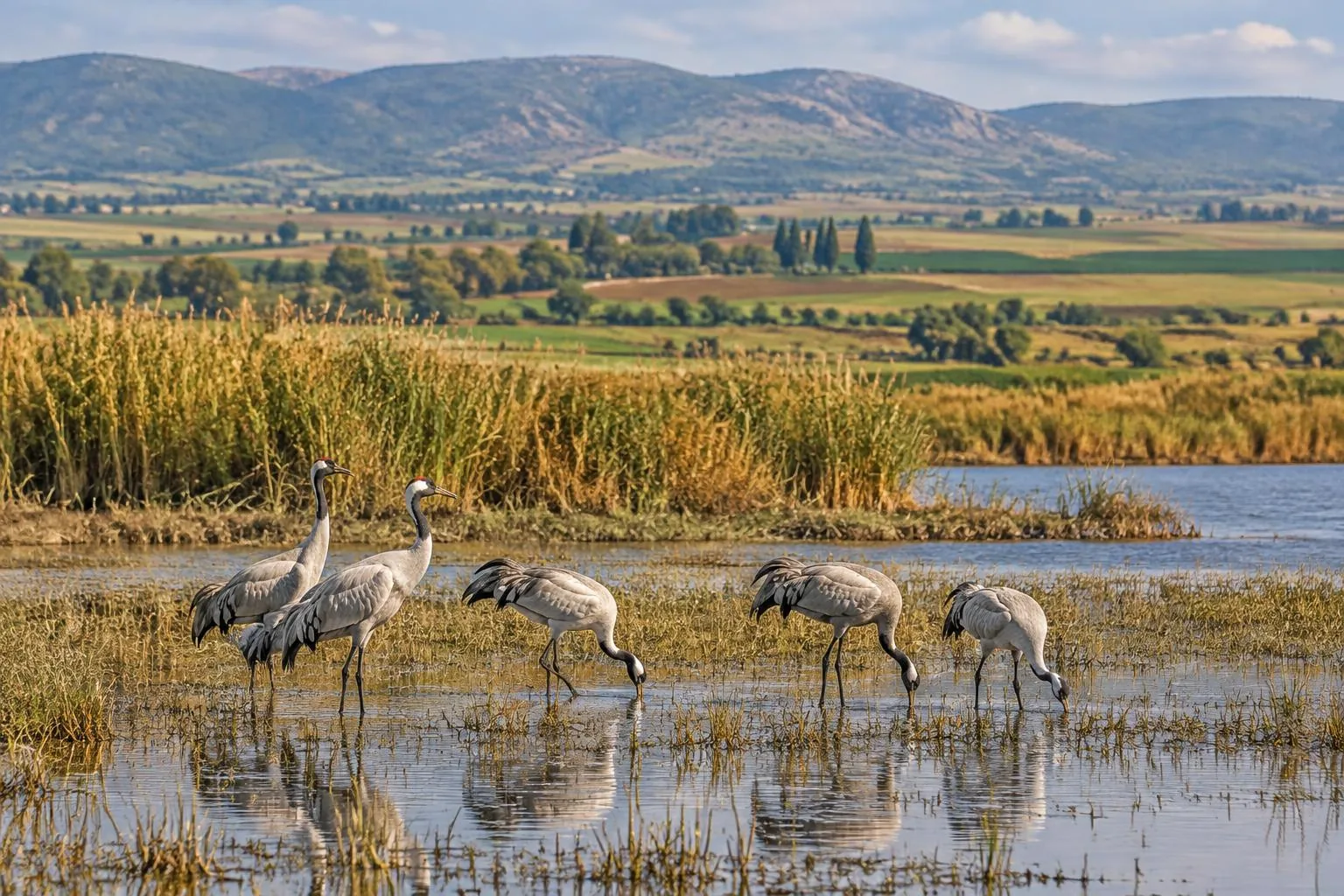
Some trips need a list of stops. Others need time to stand still. Agamon Hula belongs to the second kind: water, reeds and open farmland offer a reason to slow down and watch, rather than hurry north to the next attraction. Autumn brings changing light and migrating birds, making the Hula Valley a rewarding focus for a short break.
A good visit starts with realistic expectations. No date guarantees a particular flock, no photograph proves a viewpoint is open today, and a birdwatching morning need not be squeezed between several distant destinations. This guide helps you choose a visiting time, a suitable way to explore and a comfortable base in the Upper Galilee.
Agamon Hula and Hula Nature Reserve are different places
Agamon Hula is a KKL-JNF site combining a restored lake, farmland and bird habitats. Hula Nature Reserve is a separate site managed by the Israel Nature and Parks Authority, with its own wetland landscape and conservation history. Each has its own entrance, tickets, trails and visitor services.
Check the exact destination before booking or navigating. A bicycle service, accessible route or guided activity advertised at one site is not automatically available at the other. This matters particularly when travelling with children or someone who needs step-free access.
When can you see cranes at Agamon Hula?
Autumn is migration season, and some cranes remain in the valley through winter. Late October and November are reasonable times to plan a bird-focused visit, but not a promise of a certain number of birds or a close encounter. Weather, habitat conditions and site management influence where the birds gather.
Migration and wintering are different: a bird passing through may continue south rather than remain until spring. Even when cranes are present in the valley, they may be beyond the nearest viewpoint. Ask staff about recent observations and a suitable route rather than choosing solely from a dramatic social-media photograph.
Leave room for other birds too. Watching a heron feed or noticing a waterbird among the reeds can be as absorbing as looking at a distant flock. Binoculars help make those small encounters part of the day.
Morning or afternoon?
Softer morning and afternoon light can be pleasant for photography, while cooler temperatures may make an outdoor visit more comfortable. That is planning advice, not a fixed timetable of bird activity. Confirm opening hours, last entry and the duration of your chosen activity first.
Do not assume the gates open before sunrise. A dawn or sunset tour, if offered, may require a separate reservation. An independent visit does not permit staying after closing. With young children, a time when everyone is rested may be more useful than chasing ideal light.
Walking, cycling or a guided outing
Walking allows frequent stops; cycling can help cover more ground; guidance can explain what you are watching. Choose according to your group, not the longest or most expensive option.
Confirm which services actually operate on your date, whether reservations are needed, age restrictions and the rules for bringing your own bicycle. Older videos may show vehicles or observation areas that are currently unavailable. An open site does not mean every facility is open.
For families, a flat path does not necessarily mean a short walk. Ask about a manageable route, rest stops and the return distance. With a wheelchair or stroller, check the whole journey from parking through viewpoints to toilets, not just whether an accessible entrance exists.
Birdwatching with children
You do not need expert knowledge. Start with a small challenge: find long legs, compare a swimming bird with one walking through shallow water, or listen before looking. Passing binoculars around gives each child a turn to discover something.
Plan pauses rather than simply completing a circuit. Bring water, layers and food for permitted eating areas. When choosing accommodation, our family stays in northern Israel page provides a starting point; confirm actual beds and room arrangements directly with the host.
Photography without disturbing wildlife
As responsible visitor advice, use binoculars or a zoom lens instead of approaching birds. Stay on permitted routes, avoid entering fields or feeding wildlife, and never make a flock take flight for a photograph. Follow signage and staff instructions. If your presence changes the birds’ behaviour, move back.
A wider photograph of water, reeds and landscape can tell more than a close-up. Put the camera down occasionally: sound and movement matter too. Do not fly a drone without explicit permission and compliance with local rules and law.
A relaxed two-day Upper Galilee itinerary
On arrival day, settle into your accommodation and choose a short nearby outing. If staying in Safed, an Old City walk and dinner may make more sense than immediately driving to the valley and back after dark. Our Safed vacation guide helps plan that urban half-day.
On day two, give Agamon the main part of the day, using the visiting time and route you checked beforehand. Add lunch or one stop along your return route rather than a detour to both the Golan and the Sea of Galilee. For a prearranged winery visit, consult our Upper Galilee wineries guide; arrange a driver who does not drink.
With another day available, select an open trail that suits the weather and your fitness. Our Nahal Amud and Horshat Tal guide covers separate destinations, not necessarily stops for the same day. The post-holiday autumn travel guide offers a broader seasonal plan.
Where to stay for an Agamon Hula visit
Choose accommodation around the day you want to build. A valley base may reduce driving; Safed suits a break combining city lanes with nature. Safed is not beside the Agamon entrance, so check driving time from the specific address rather than relying on the label “Upper Galilee”.
Browse Upper Galilee accommodation, places to stay in Safed or all northern Israel stays on Tzela HaHar. Confirm location, approved capacity, beds, availability and price with the owner. The catalogue does not guarantee a vacancy close to Agamon.
For autumn evenings, ask about room heating, hot water and breakfast. If leaving early, check breakfast times or kitchen access. These practical details can matter more than another scenic photograph.
Opening hours, tickets and weather
Use the official KKL Agamon page for current visitor information and the official Agamon website for available bookings. Check your date, last entry, services and reservation requirements. This guide deliberately avoids fixed prices and opening hours that may become outdated.
Read KKL visitor notices, the forecast and Home Front Command guidance before travelling. If an activity is cancelled or conditions unsuitable, choose an alternative rather than improvising in closed areas. Hula Nature Reserve has separate information on the Nature and Parks Authority website.
Frequently asked questions
When is the best time for cranes? Autumn and winter are suitable seasons to plan around them, but exact timing and locations vary. Check recent reports.
Is Agamon suitable for young children? A family visit can work with a sensible distance, breaks and an appropriate activity. Verify age limits and stroller access.
How much time should we allow? Keep several hours free rather than fitting it between two attractions. Your route, pauses and opening hours determine the actual duration.
Must we book a guided tour? Check the currently offered independent and guided options. Availability and booking rules can change.
Can we combine Agamon and Safed in one day? Possibly, depending on travel and opening times, but an overnight stay creates more breathing room, especially with children.
Sources and cover image
This guide draws on KKL-JNF and Israel Nature and Parks Authority material and distinguishes Agamon from the separate reserve. It is not a live opening-status report or a forecast of crane numbers. Confirm practical details with the operator before travelling. The cover is an image created to illustrate the article, not a documentary photograph of conditions on a particular day.
Choose a workable time, bring binoculars and leave room to stop. The rest of the holiday can follow that slower rhythm.